
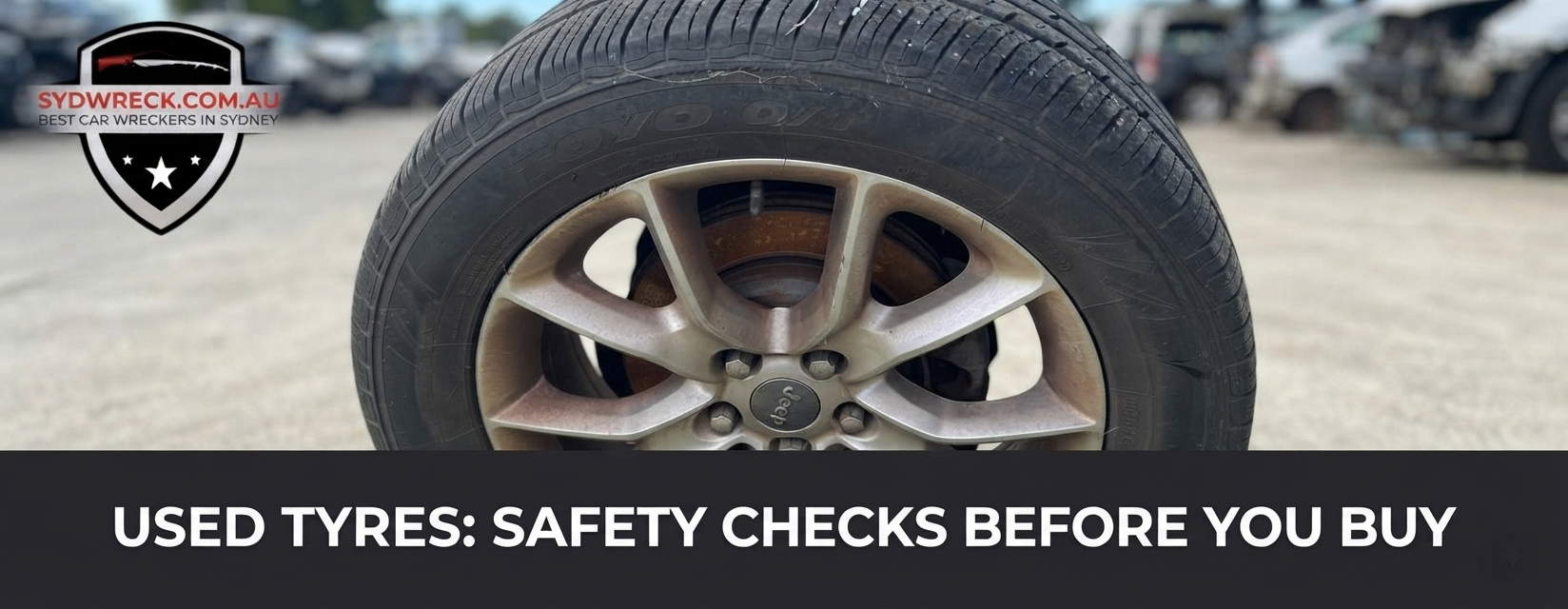
Used tyres are a viable alternative if a replacement needs to be installed without bearing the cost of purchasing new tyres. But the reduced cost should never be the sole criteria for choosing a used tyre. The tyre condition, the tread depth, age, wear pattern, and obvious damage play an important role in assessing if a used tyre will suit your needs. Sydwreck acknowledges that car owners may think of using second-hand parts as part of their budget planning, but safety should always be a top priority.
Is a used tyre safe? It could be, as long as the tyre condition complies with the requirements of your car. In NSW, tyres must be in good condition, must not be bald and have at least 1.5 mm of tread depth in the concerned grooves.
Why Do People Buy Used Tyres?
One of the factors that make people buy used tyres is the price. Used tyre that still has some tread left will be cheaper than buying new tyres all around. The other factor is convenience. The driver may want only one tyre because he had an accident or his tyre got damaged. In this case, the used tyre could be the best solution.
On the other hand, tyres play a very important role when it comes to safety. The tyre that looks good from afar may not be good at all. The problem may be hidden inside the tyre or in its sidewalls. SafeWork NSW recommends to check both new and used tyres for defects.
What Should You Check Before Buying a Used Tyre?
Buying a used tyre should involve more than checking how much tread is left. A proper visual inspection can help identify obvious problems.
- Check the Tread – Look across the tyre rather than checking only one section. Uneven wear may indicate previous alignment, steering or suspension issues with the vehicle on which the tyre was used. NSW Government guidance states that tyres on a road vehicle must have at least 1.5 mm of tread depth in the required principal grooves and must not be smooth.
- Look for Cracks and Sidewall Damage – Inspect both sidewalls carefully. Avoid tyres showing cracks, cuts, bulges, exposed damage or unusual deformation. SafeWork NSW identifies defects such as perishing, delamination, wavy tyre walls and sidewall damage as potential hazards.
- Look for Uneven Wear – A tyre with noticeably different wear across the tread may have been affected by alignment, suspension or inflation problems. NSW Government used-vehicle inspection guidance also recommends checking tyres for uneven wear.
- Check the Tyre’s Age – Tyre age should also be considered. Rubber can deteriorate over time, particularly when tyres have been exposed to unsuitable storage conditions, heat or other environmental factors. NSW specifically lists perishing on tyres more than five years old among defects that should be checked.
- Confirm the Correct Size – A tyre should match the vehicle’s required specifications. Check the size markings and compare them with the vehicle manufacturer’s requirements before purchasing.
Used Tyres and NSW Roadworthiness
In the case of drivers in Sydney as well as other areas of NSW, tire condition is one aspect of roadworthiness. The NSW Government has indicated that the tires, including the spare tire, should be in good condition. These should not be bald and should have a minimum tread depth of 1.5 millimeters. Also, the tires should have adequate inflation and no cuts, bumps, or irregular wear.
This implies that for a tire to be deemed safe for use, it cannot be just through the presence of visible tread alone. Other aspects will matter too. In inspecting a second-hand tire, one needs to take into consideration not only the measurable tread but also the general condition of the tire.
Looking for used vehicle parts? Call 02 9091 3593 to check current availability.
When Should You Avoid a Used Tyre?
A used tyre should not be treated as a bargain when there are visible signs of deterioration or damage.
Avoid tyres that show:
- Cracks or significant perishing
- Bulges or unusual sidewall shapes
- Cuts or serious sidewall damage
- Delamination
- Exposed cords or structural damage
- Severe or irregular tread wear
- Insufficient tread
- Unclear or unsuitable specifications
SafeWork NSW states that defective tyres should be disposed of appropriately and notes that not all defects may be visible during a basic inspection. For this reason, buying from an unknown source simply because the tyre is cheap can create unnecessary risk.
Used Tyres vs New Tyres
Decision making on whether to buy either new or used tyres is dependent on one’s car and budget.
- Used tyres can be inexpensive and helpful when you have a compatible set of replacements in good shape.
- New tyres will give you a new tire tread and history, thus, making the decision easier for you.
Money should, therefore, be considered in addition to other factors such as specifications and intended use of the tyre. A cheap tyre might not be economically beneficial if it requires replacement soon or is incompatible with the vehicle.
What Should You Check on a Used Tyre?
Before buying, check using this short checklist:
- Tread: Is there enough usable tread left?
- Condition: Do any cracks, cuts, bulges, or other apparent damage exist?
- Wear: Is there even wear on the tread?
- Age: Is the tyre deteriorated?
- Size: Does it fit your vehicle’s specifications?
- History: Can the seller give you an account of the history of the tyre or why it was removed?
- Suitability: Has it been inspected before being fitted?
This checklist will allow you to prevent purchasing a cheap tyre which is not right for your car.
Final Thoughts
Used tyres can lower the cost of replacements, but safety must take priority over cost considerations. The buyer should look at the tire’s wear level, its condition, wear patterns, age and suitability for the particular vehicle. In NSW, having the minimum level of tread is just one consideration when evaluating if the tyre is suitable to use.
For those in Sydney, spending a little more time examining the used tyre before making the purchase can prevent a poor choice. When the condition of a tire is not known, then an expert evaluation would be better.