
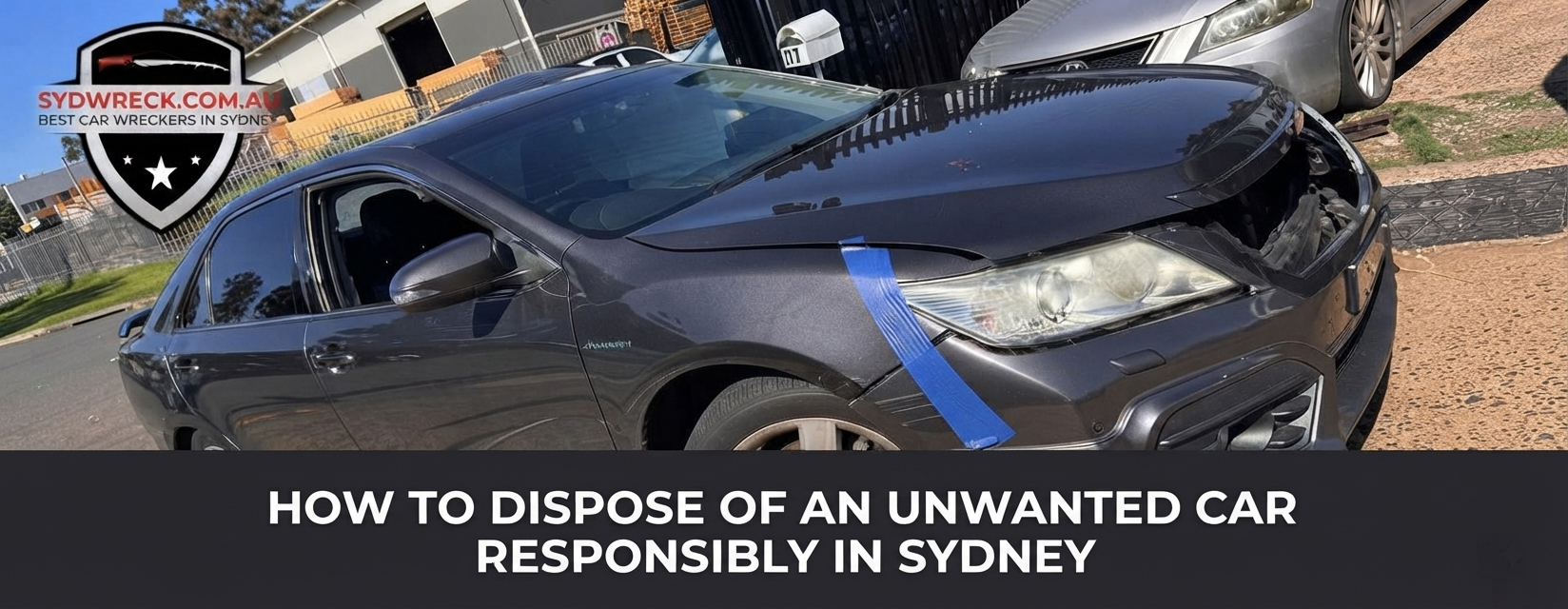
Disposal of old and wrecked cars is not only about removal of the old car from your premises. Proper disposal of the car requires selection of a disposal method, reuse and proper recycling of reusable and recyclable parts of the car, and fulfillment of all NSW registration requirements related to that. For car owners in Sydney, Sydwreck serves as a realistic alternative for talking about such cars and arranging their pickup.
What Is Proper Car Disposal?
Car disposal refers to the handling of an unwanted car by using the correct procedure, instead of dumping or neglecting it. The older vehicle can have elements which could be re-used or recycled from it. A responsible disposal system would involve finding out those elements which could possibly be reused and separating recyclable materials.
A correct disposal procedure may vary based on whether the vehicle is registered or not, whether it is damaged, wrecked or not running. It is important for the owner to be aware of their obligations before they hand over the vehicle.
Why Does Responsible Car Disposal Matter?
An unwanted vehicle would consume space and would pose difficulties of management once the car is no longer drivable or is not worth fixing anymore. Moreover, leaving an unused car for too long can also complicate its disposal process.
Proper car disposal will give the owner an organized process in which the unusable parts of the vehicle can be sorted from those which could be re-used. From the perspective of vehicle owners, responsible disposal can give them clarity on how to dispose of the car legally and properly.
What Happens to a Car After Disposal?
It is not always true that when a vehicle goes to a wrecker or dismantling yard, it automatically becomes waste. It is based on the condition of the vehicle; in case of some suitable components, an assessment of the vehicle would be made to see what components could possibly be re-used.
The rest of the vehicle can be disassembled to separate various materials or components from each other, so that further processing or disposal of such materials can take place. This step could give some useful components of a vehicle another chance to be used while minimizing wastage of material.
Which Car Parts Can Be Reused?
Even old or damaged cars may still have parts that are salvageable and can be reused on other cars. These may include:
- Engine and transmissions
- Alternators and starters
- Automotive electrical components
- Suspension components
- Body parts
- Wheels and related parts
- Interior components
- Mirrors and headlights
- Selected automotive mechanical components
The condition and usability of all of these will need to be determined before reuse. Second hand car parts are also based on what is currently available.
Need to dispose of an unwanted vehicle? Call 02 9091 3593 to discuss your vehicle collection requirements.
How Are Scrap Vehicles Processed?
The scrapped or end-of-life vehicles can undergo disassembly prior to treatment for material recovery of the remainder of the vehicle materials. Usable parts can be stripped off first if need be. The rest of the materials can thereafter be sorted based on their nature and the mode of recovery they will undergo.
Metal is one of the most significant materials that are recovered from the end-of-life vehicles, while other materials may need different methods. This will depend on the state of the vehicle among other factors. It would be more prudent to take such action rather than just dumping the vehicle.
What Should You Do Before Disposing of Your Car?
A little preparation will help make vehicle disposal easier. The first step is to gather details about the vehicle, including the make and model of the car and its registration and VIN. Personal items should be removed from the car prior to collection.
If the vehicle is registered in NSW, it is advisable to know the vehicle’s disposal requirements prior to the sale of the vehicle. It will also be helpful to have documentation as to when the vehicle was disposed of or sold, and by whom.
In the event that the vehicle is damaged or not operable, it will be beneficial to provide an accurate description of the vehicle and its access needs.
NSW Vehicle Disposal and Registration Requirements
Vehicle owners based in Sydney need to be aware of the rules concerning the registration of a NSW vehicle upon its disposal. According to Service NSW, a Notice of Disposal needs to be completed whenever one disposes of or sells a vehicle that is NSW registered. The notice alerts Transport for NSW that you are no longer the registered operator of the vehicle and helps keep you from being caught up in parking or driving offenses involving the vehicle.
There is a special requirement for vehicles that are disposed of to wreckers. According to Service NSW, one is required to provide a Notice of Disposal if the vehicle to be disposed of has a license plate and is sold to a wrecker. When a vehicle is disposed of to a wrecker without a license plate, or a written-off vehicle is disposed of, the registration cancellation process differs.
Can Unregistered Cars Be Disposed Of?
Sure, an unregistered car could be disposed of using a proper disposal procedure or collection service, but drivers need to be cautious before using an unregistered vehicle for travel purposes.
According to the NSW government, the use of an unregistered car is against the law except for particular instances, including registration-related trips and unregistered vehicle permits.
In the case of an unregistered and unroadworthy car, having it transported using a proper transport service would prevent its use on the road.
How to Choose a Car Disposal Service in Sydney
Before arranging disposal, consider whether the service clearly explains what happens with the vehicle after collection.
Useful questions include:
- Does the service collect non-running vehicles?
- Are damaged and end-of-life vehicles accepted?
- How is the vehicle dismantled?
- What happens to reusable parts?
- How are recyclable materials handled?
- What information is needed before collection?
Clear answers can help you understand the process before making an arrangement. Avoid relying only on claims such as “100% recycled” or “completely eco-friendly” unless the business can provide evidence for those statements.
Car Disposal Checklist for Sydney Owners
Before making any arrangement for disposing of the car, one should check whether the service offers an explanation of what will happen to the car after collection.
Some useful questions are:
- Does the service take non-functional cars?
- Does the service take damaged and end-of-life cars?
- How is the car broken down?
- What will happen to any usable parts of the car?
- How will recycling be done?
The answers to these questions might be useful before doing anything further.
Final Thoughts
Proper disposal of vehicles provides residents of Sydney with an opportunity to address their problems with old, damaged, scrapped, and unwanted cars. In contrast to disposing of the whole car, proper disposal allows parts of cars that can be reused to be recovered.
Administrative aspects are also crucial. Owners of registered vehicles need to have some knowledge about existing rules of disposal in NSW and complete the necessary steps for disposal or registration of a car. It is important to choose a company that will provide detailed information about collection and disposal of a car.